Weather Patterns Reshaping Accumulator Statistics Across Multiple Sports
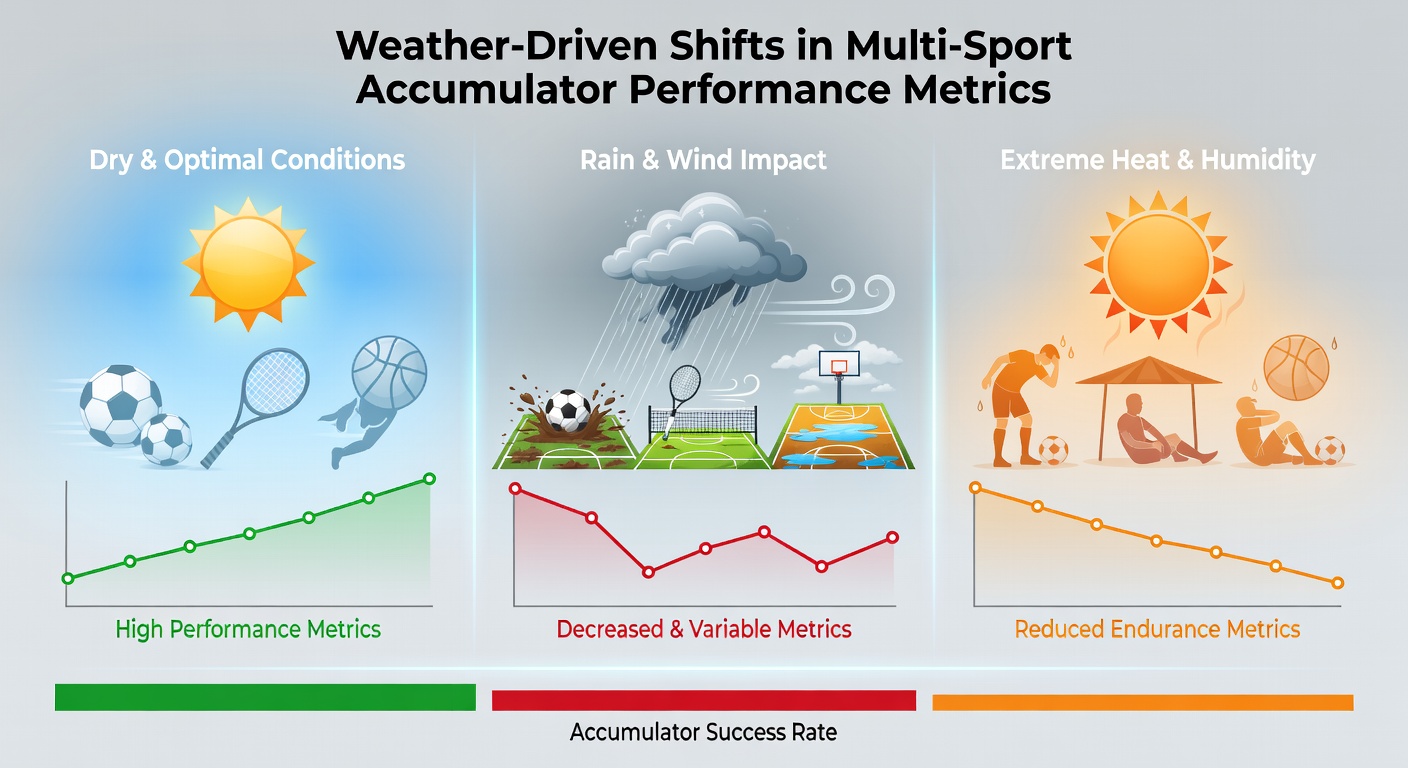
Weather conditions have long influenced individual sports results, yet their cumulative effects on multi-sport accumulator performance metrics receive less attention in mainstream analysis. Rain, wind, temperature swings, and humidity alter player endurance, equipment behavior, and surface conditions in ways that compound across linked selections, shifting payout probabilities in measurable patterns. Observers note that data sets spanning several seasons reveal consistent deviations when accumulators incorporate events from football, tennis, and horse racing under varying meteorological influences.
Football Accumulator Adjustments Under Precipitation
Heavy rainfall changes pitch traction and ball movement, prompting teams to favor shorter passes while reducing long-range attempts. Performance metrics collected by European sports analytics groups show goal tallies drop by an average of 0.4 per match during sustained downpours compared with dry conditions, directly affecting over-under legs within accumulators. Those who track league-wide statistics across England, Spain, and Germany observe that defensive solidity increases, yet set-piece conversion rates rise when surfaces become slick, creating alternative angles for bettors constructing multi-leg wagers.
Temperature and Wind Effects in Tennis Markets
High temperatures accelerate ball speed and increase fatigue during extended rallies, while crosswinds disrupt serve placement and topspin consistency. Researchers tracking ATP and WTA data from outdoor tournaments report that tiebreak frequency climbs when gusts exceed 20 kilometers per hour, altering the expected duration of matches that often feature in accumulator tiebreak props. One study from a North American academic institution highlighted how humidity levels above 70 percent correlate with extended service games, thereby influencing total games over-under selections that combine with football or racing legs.
Horse Racing Track Conditions and Accumulator Chains
Moisture content on turf and dirt surfaces modifies stride length, stamina demands, and finishing speeds in ways that directly feed into each-way and win accumulator structures. Data from Australian racing authorities indicate that soft ground favors stayers over sprinters in races beyond 1600 meters, shifting place terms and dividend calculations for linked bets. Observers following North American and European circuits note that sudden temperature drops overnight can firm up tracks by race time, reversing morning line expectations and creating value shifts that compound across multi-sport parlay combinations.

Cross-Sport Correlation Data from Recent Seasons
Integrated data platforms that merge meteorological records with betting outcomes demonstrate how simultaneous weather events across regions amplify variance in accumulator returns. For instance, a May 2026 European heatwave coincided with wet conditions in parts of Australia and North America, producing measurable divergences in football goal rates, tennis match lengths, and thoroughbred finishing times within the same 24-hour window. Industry reports compiled by international gaming associations show that accumulators spanning three or more sports experienced standard deviation increases of up to 18 percent during such overlapping weather anomalies, prompting professional syndicates to adjust stake sizing and leg selection criteria accordingly.
Those monitoring regulatory updates note that several jurisdictions now require operators to disclose historical weather-adjusted performance data for accumulator products, improving transparency for participants who build complex multi-sport chains. Figures released by Canadian provincial gaming commissions reveal rising interest in weather-indexed betting tools that allow real-time adjustments to accumulator legs based on live forecasts from sources such as the European Centre for Medium-Range Weather Forecasts.
Practical Metric Tracking Approaches
Analysts recommend monitoring venue-specific weather histories rather than broad regional forecasts when constructing accumulators. Surface temperature readings taken two hours before kickoff or first serve provide more reliable inputs than general climate models, while wind direction data at track level proves more predictive for racing outcomes than city-wide reports. Performance dashboards used by professional bettors integrate these variables into probability matrices that recalculate accumulator odds as weather updates arrive, reducing exposure to sudden shifts.
Conclusion
Weather-driven shifts in multi-sport accumulator performance metrics continue to evolve as data collection improves and cross-regional events become more frequent. Accurate tracking of precipitation, wind, temperature, and humidity across football, tennis, and horse racing venues enables more precise probability modeling, while emerging regulatory requirements around data disclosure support informed decision-making. Observers expect further refinement of these metrics through 2026 and beyond as forecasting tools and integrated analytics platforms advance.