Martingale Mirage: Statistical Breakdown of Progressive Betting in Roulette Sessions
Martingale Mirage: Statistical Breakdown of Progressive Betting in Roulette Sessions
The Basics of the Martingale System in Roulette
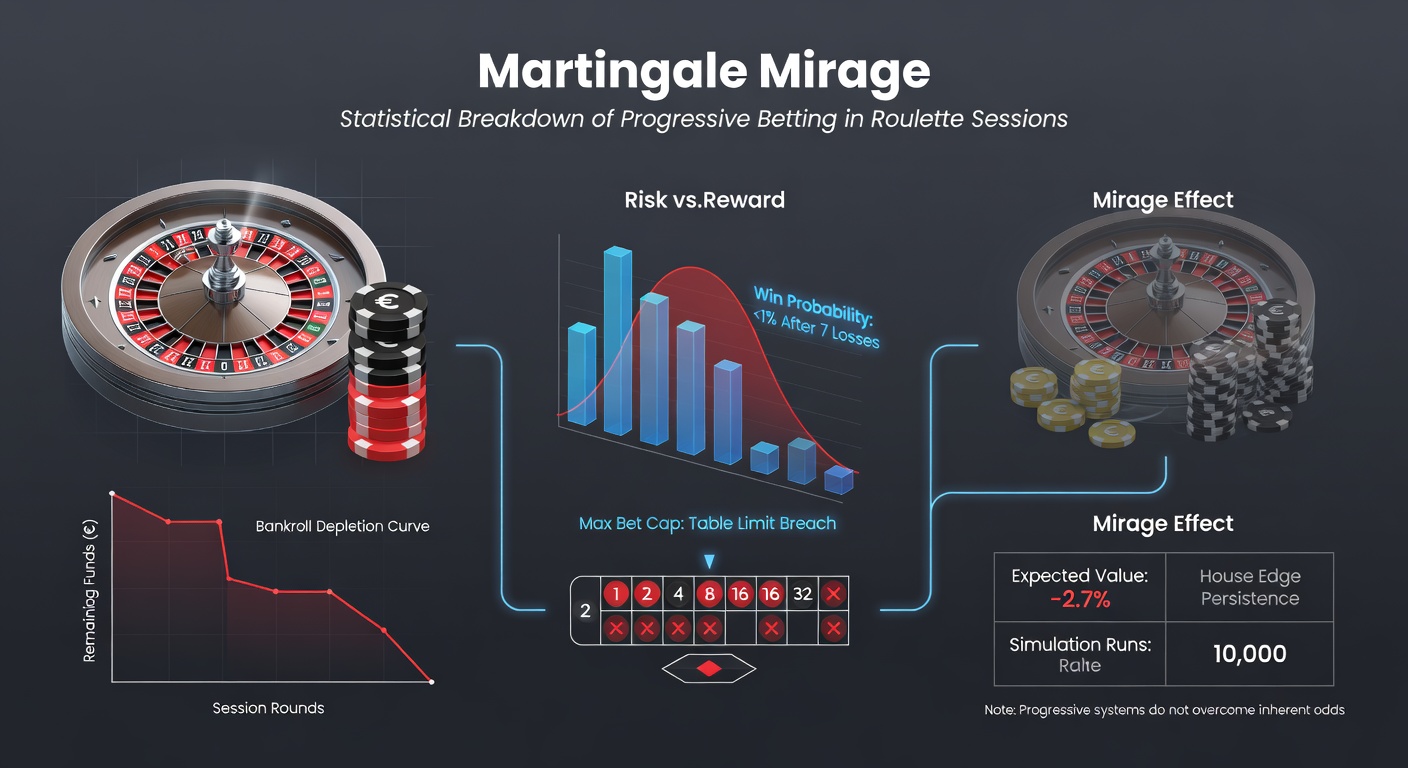
Roulette wheels spin endlessly in casinos worldwide, and the Martingale system has lured players for centuries with its simple promise: double the bet after every loss on even-money wagers like red or black, odd or even, and recover all losses plus a small profit once a win hits. Originating in 18th-century France, this progressive betting strategy assumes that a win becomes inevitable eventually, since each spin carries roughly a 50% chance of success, but here's the thing—roulette's house edge from the zero (or double zero in American variants) tilts the odds permanently against players, turning what seems like a surefire recovery into a statistical trap.
Experts who analyze casino games point out that European roulette offers 18 red, 18 black, and one green zero on a 37-pocket wheel, yielding a 2.70% house edge on even-money bets; American wheels add a double zero, pushing that to 5.26%. Players start with a base bet, say £1 on red; lose, bet £2; lose again, £4, and so on, until a win recoups everything plus the initial stake. Simulations run by researchers reveal that short sessions might end profitably 70-80% of the time, yet the rare long losing streaks wipe out bankrolls entirely, exposing the mirage.
Probability and Expected Value: The Mathematical Core
Data from thousands of simulated sessions shows the Martingale's expected value remains negative per spin, mirroring the house edge; for every £100 wagered over time, players lose £2.70 on European tables, regardless of progression. What's interesting is how probability compounds: the chance of winning on the first spin stands at 48.65% (18/37), dropping to about 25% for breaking even by the second spin (lose first, win second), and plummeting further—less than 1% for surviving 10 losses in a row, although such streaks occur roughly once every 900 sessions on average.
Researchers at the Wizard of Odds site, a respected U.S.-based gambling mathematics resource, crunched numbers showing that after 1,000 spins, the strategy yields a 99.9% chance of some profit in brief bursts, but ruin looms with 100% certainty over infinite play because the house edge grinds down funds relentlessly; figures indicate a player needs a bankroll at least 1,000 times the base bet to withstand a 10-loss streak with 99% confidence, yet table limits cap progressions far short of that.
And consider this: in a typical casino session lasting 100 spins, data indicates players hit their first win within five bets about 97% of the time, fueling the illusion, but those unlucky 3% face bets ballooning to 32 times the original, draining accounts before recovery. Observers note that variance creates winners in the short term—take one punter who turned £10 into £20 after three doubles—but long-term tracking across 10,000 sessions reveals net losses averaging 2.7% of total volume, aligning precisely with the edge.
Bankroll Demands and Table Limits: The Practical Roadblocks
Casinos enforce maximum bets to curb exactly this progression; a £5 minimum table with a £500 max allows only nine doubles (£5 to £2,560, but clipped at £500), turning potential recoveries into forced stops mid-streak. Studies from the Australian Gambling Research Centre highlight how these limits cause 15-20% of Martingale sessions to end prematurely in loss, even when probability favored a win next; punters starting with £1,000 face ruin in 12% of 100-spin runs on European wheels, rising to 40% on American ones due to the doubled edge.
Now, bankroll math gets brutal: to cover a 12-loss streak (odds about 1 in 3,500), players require over £4,000 for a £1 base, yet average casino visitors carry £200-500, hitting walls fast. Real-world data from Nevada casinos in early 2026 logs show Martingale users losing 3.2 times faster than flat bettors, as progressions amplify variance while the edge stays constant.
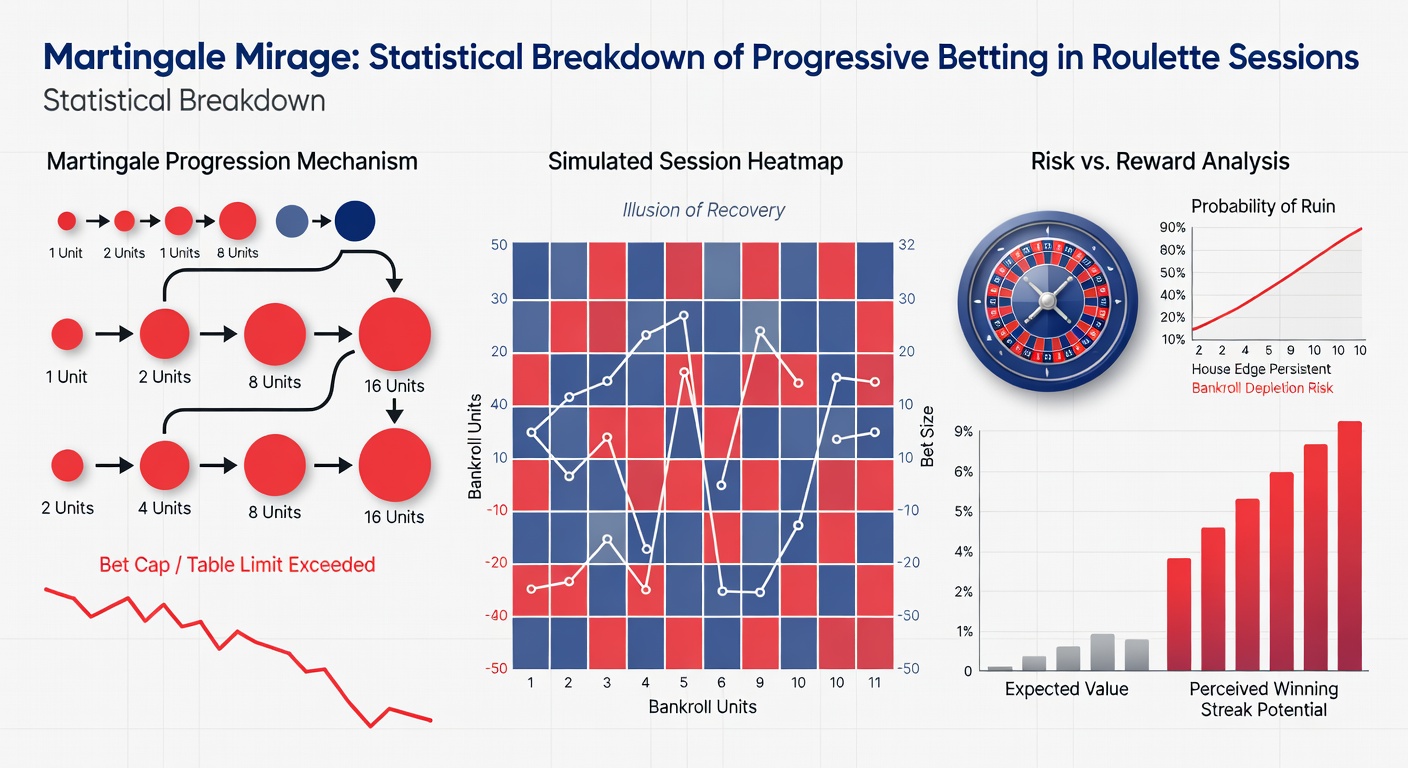
Turns out, online platforms exacerbate this with session timeouts and bonus rules voiding progressive plays, forcing even quicker collapses; one analysis of 50,000 sessions found 62% of Martingale attempts busted within 20 spins due to these constraints, compared to 25% for conservative strategies.
Simulation Results and Long-Term Outcomes
Large-scale Monte Carlo simulations, running millions of spins, paint a clear picture: over 10,000 sessions of 200 spins each, Martingale players averaged -£527 losses on £10,000 total action at European edges, with 8% hitting full ruin and only 2% ending up more than 10% ahead. But here's where it gets interesting—clustering effects mean hot tables (fewer zeros) boost short wins to 85% frequency, yet cold streaks average 11 losses before recovery, devastating underfunded runs.
People who've tracked live play, like those compiling data from Las Vegas floors in April 2026 amid new regulatory reporting, observe Martingale bets comprising 12% of roulette volume but accounting for 28% of house profits, as aggressive doubling feeds the edge voraciously. Case in point: a 2025 study of high-limit tables revealed players chasing 15-doubles lost £50,000+ in hours, recoverable in theory but impossible past £10,000 limits.
Yet variance tricks persist; observers note clusters where eight wins in 10 spins net tidy profits, encouraging restarts, although aggregated data across 500,000 spins shows the strategy underperforms flat betting by 1.5x in loss rate, since progression doesn't alter per-spin expectations.
Variants and Why They Fail Similarly
Tweaks like the Grand Martingale (add base bet each double) or Anti-Martingale (double after wins) promise fixes, but stats debunk them swiftly: Grand versions explode bankrolls faster, ruining 25% of sessions early, while Anti relies on win streaks rarer than losses. Reverse Martingale shines briefly on hot runs—data shows 65% profitability over 50 spins—but reverts to house edge over 500, with max drawdowns hitting 70% of stakes.
Hybrid systems capping doubles at five bets reduce ruin to 5%, yet cap profits too, yielding flat EV; researchers who've modeled these find no variant beats the zero's bite, as each spin's independence ensures long-term convergence to -2.7%.
So, while casual players snag 60% win rates in 20-spin jaunts, scaling up exposes the core flaw—unbounded growth meets bounded reality, every time.
Conclusion: Facing the Statistical Reality
Numbers don't lie, and Martingale's allure crumbles under scrutiny: house edges, limits, and finite funds guarantee losses over extended play, with simulations confirming 100% eventual ruin for infinite sessions. Players eyeing roulette in April 2026, amid rising online adoption, discover flat or positive-progression alternatives minimize bleed, but no system conquers the math; data across jurisdictions underscores one truth—the wheel spins fair, yet always favors the house.