Fixture Pile-Ups Shape Football Accumulator Patterns in Congested Schedules

Understanding Schedule Congestion in Modern Football
Fixture pile-ups occur when teams face multiple matches within short time frames, often due to domestic leagues, cup competitions, and international commitments overlapping. Data from European competitions indicate that top clubs can play up to 60 games in a single season, with clusters of three or four fixtures in ten days becoming common during winter months and spring runs. Observers note these periods intensify around December, March, and the season's closing weeks, when recovery time shrinks and squad rotation decisions multiply.
Researchers at academic institutions have tracked how such congestion correlates with changes in team output, including lower goal tallies and altered win rates. Studies published in sports science journals show average sprint distances drop by 5 to 8 percent after consecutive high-intensity matches, while pass completion rates in the final third decline measurably. These measurable shifts feed directly into accumulator markets that rely on totals, both-teams-to-score outcomes, and handicap lines.
Performance Metrics During High-Density Periods
Statistics compiled across Europe's major leagues reveal consistent patterns when teams play with less than four days between fixtures. Home win percentages fall from an average of 46 percent in standard weeks to around 39 percent in congested blocks, according to aggregated match data. Away sides experience even steeper drops in expected goals, which influences accumulator builders who combine multiple away victories or over-2.5 goals selections.
Player workload tracking from wearable devices used by professional clubs demonstrates elevated injury risk after three matches in eight days. Midfielders and full-backs log the highest cumulative distances, leading to higher substitution rates that alter tactical setups. These rotations often produce fewer shots on target, a factor that accumulator models incorporate when weighting goal-related props across several games.
Accumulator Selection Adjustments in Peak Periods
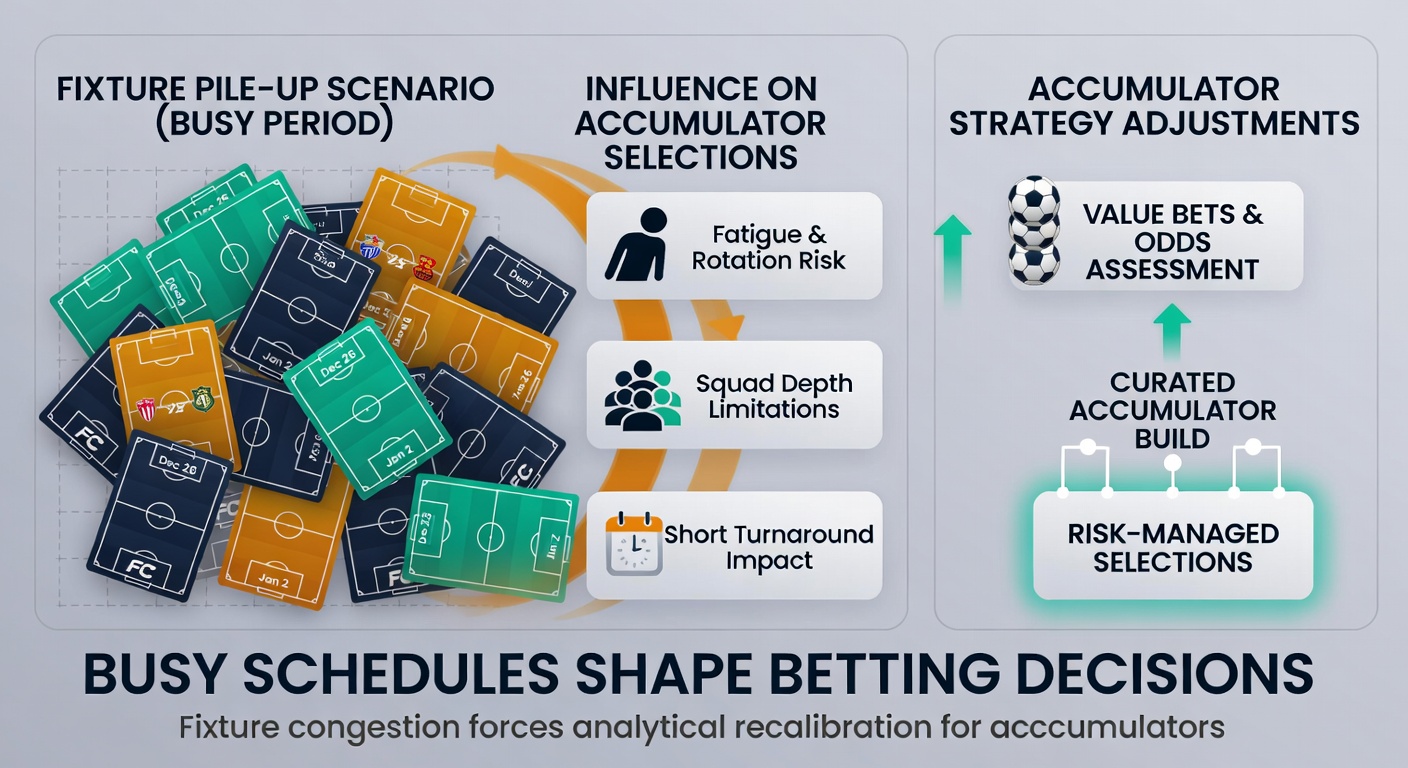
Accumulators built during busy schedules frequently shift emphasis toward under goals markets and draw outcomes. Historical datasets from the 2018 through 2024 seasons show under-2.5 goals occurring in 54 percent of matches following a midweek European tie, compared with 48 percent in standard schedule weeks. This trend strengthens further when both sides have played midweek fixtures, prompting selections that combine multiple unders or draw-no-bet options.
Teams with deeper squads tend to maintain steadier results, while those relying on smaller rotations see sharper declines in attacking metrics. Analysts reviewing Premier League and Bundesliga records have identified that sides with at least two natural centre-backs available for rotation concede 12 percent fewer goals per game than thinner squads during March and April pile-ups. Accumulator constructors integrate these squad-depth indicators alongside fixture lists to refine selections.
Regional Variations and Scheduling Influences
League structures produce different congestion profiles. English clubs competing in multiple fronts encounter denser calendars than counterparts in leagues with winter breaks. Figures released by the European Club Association highlight that English, Spanish, and Italian teams average 2.3 more fixtures per season than German or French clubs when European and domestic cup paths align. These differences affect cross-league accumulators, where bettors combine English matches with fixtures from leagues experiencing lighter loads.
Weather and travel add further variables during packed periods. Data from northern European leagues indicate increased draw frequency in December when pitches soften and visibility decreases. Accumulator strategies that include Scandinavian or Eastern European matches during this window often weight draw outcomes more heavily based on these environmental factors.
Looking Ahead to May 2026 Scheduling
With the 2026 FIFA World Cup scheduled for June and July, domestic leagues face compressed calendars in the preceding months. Preliminary fixture drafts suggest several top European leagues will conclude their campaigns by mid-May 2026, creating dense final-day clusters. Early modelling from scheduling software used by league organizers projects up to four additional midweek rounds between February and April compared with 2024 cycles, which will likely amplify the statistical trends already observed in prior congested periods.
Teams balancing league survival or title races with cup runs will encounter the sharpest fixture density. Historical parallels from shortened seasons show elevated instances of rotated lineups and cautious approaches, patterns that accumulator builders monitor through team news feeds and training reports.
Conclusion
Fixture pile-ups generate measurable effects on match statistics that accumulator selections must account for through workload data, squad depth indicators, and historical outcome shifts. As calendars tighten toward 2026, these patterns will continue to inform structured approaches that combine multiple lower-variance markets across congested gameweeks.