Altitude's Influence on Athletic Endurance and Dynamic Betting Market Responses
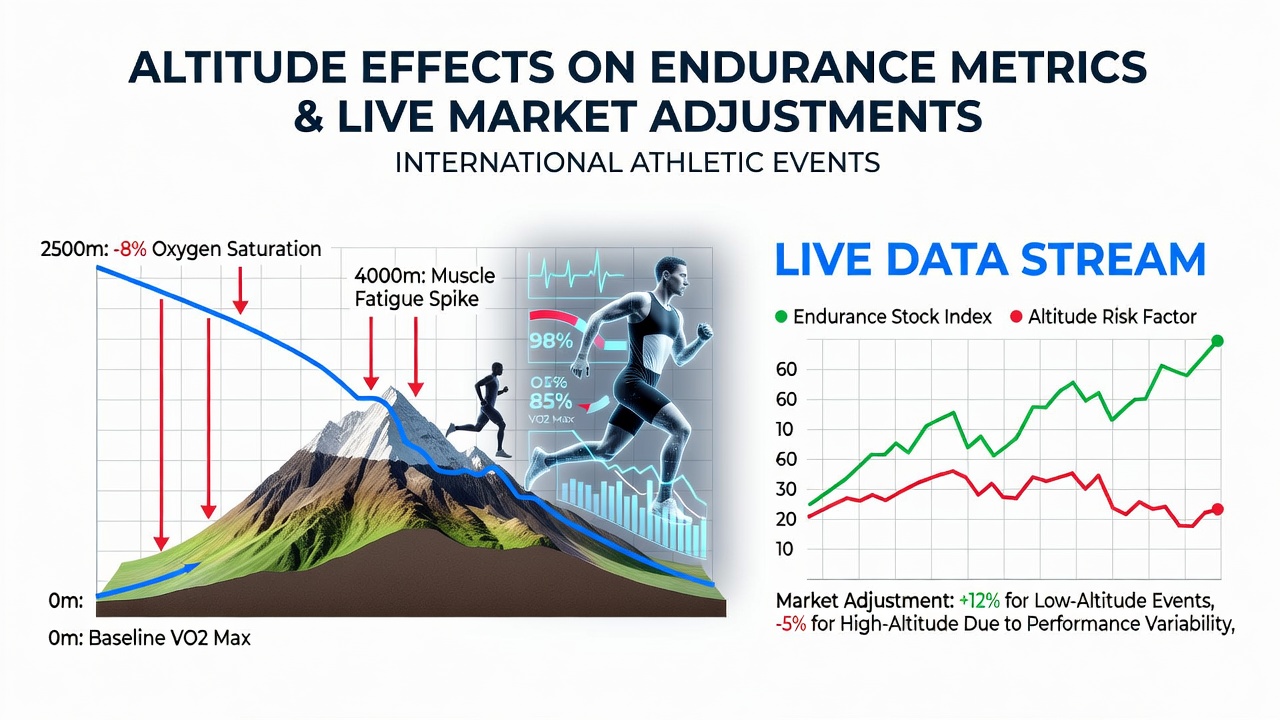
High altitude venues create measurable shifts in endurance performance because lower oxygen availability reduces aerobic capacity and forces physiological adaptations that alter race outcomes, while live betting markets respond by recalibrating odds in real time based on these documented effects. Athletes competing above 1,500 meters experience decreased partial pressure of oxygen, which directly lowers VO2 max values by 7 to 10 percent for every 1,000 meters of elevation gain according to exercise physiology data compiled across multiple international competitions.
Physiological Metrics Affected by Elevation
Endurance events such as marathons, cycling stages and distance running see consistent patterns where elite performers record slower times at altitude compared with sea-level benchmarks, yet some power-based efforts like sprint finishes or explosive climbs show relative preservation because anaerobic systems remain less impaired. Researchers tracking heart rate, blood lactate thresholds and hemoglobin saturation during events at locations including Mexico City, Addis Ababa and Boulder have recorded elevated resting heart rates alongside reduced peak outputs that persist until acclimatization occurs over several days or weeks.
Studies conducted by institutions in North America and Europe demonstrate that athletes who train at altitude for 3 to 4 weeks prior to competition increase red blood cell mass and improve oxygen-carrying capacity, producing measurable gains once they return to lower elevations, whereas those arriving without preparation face immediate disadvantages in sustained efforts lasting beyond two minutes. Data collected during the 1968 Mexico City Olympics established baseline expectations that continue to inform modern preparations for any event scheduled above 2,000 meters.
Historical Performance Patterns in International Events
International federations maintain detailed records showing that distance records set at altitude often remain outliers until equalized by subsequent performances at comparable elevations, while sea-level records rarely transfer directly. One notable case occurred during the 2015 World Championships in Athletics held in Beijing at modest elevation, where several endurance specialists underperformed relative to pre-event expectations because residual effects from prior altitude training camps altered their pacing strategies and recovery rates.
Observers tracking multi-stage cycling races through mountainous regions note that teams adjust tactics around known altitude profiles, with breakaways succeeding more frequently on climbs above 2,500 meters because sustained power outputs drop for the peloton as a whole. These predictable metric changes provide statistical anchors that shape pre-event modeling across global competitions scheduled through 2026.
Live Market Adjustments During Competition
Betting operators monitor real-time biometric feeds, split times and weather conditions at altitude venues to update odds dynamically, especially in events where partial acclimatization windows create variance in expected results. When an athlete shows slower-than-projected splits during the opening stages of a high-elevation stage race, markets frequently shift margins within seconds as algorithms incorporate historical altitude penalties derived from past performances at the same location.
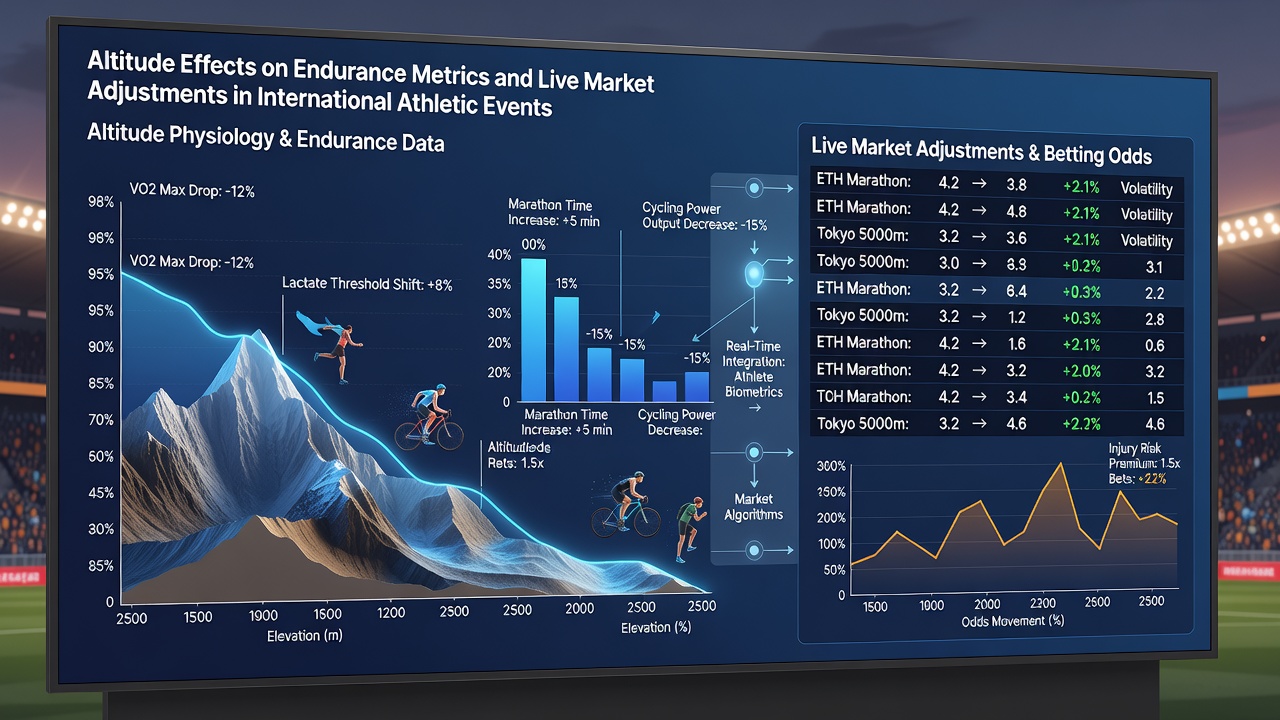
June 2026 features several endurance fixtures at elevated sites across South America and East Africa that will test these adjustment mechanisms further, with preliminary modeling already accounting for expected oxygen saturation drops and recovery intervals between stages. Operators integrate inputs from governing bodies such as the International Olympic Committee alongside academic datasets from sports science centers in Australia and Canada to refine live pricing accuracy.
Regional Data Sources and Market Integration
Government health agencies in Andean countries publish periodic reports on altitude-related performance trends that feed into broader industry analyses, while peer-reviewed studies on hypoxic training responses provide quantitative frameworks used by analysts worldwide. European sports institutes contribute additional longitudinal data from training camps in the Alps, creating layered inputs that reduce uncertainty in market models during live international events.
These combined datasets allow markets to distinguish between temporary altitude-induced slowdowns and genuine form changes, preventing overreactions that might otherwise distort pricing when athletes cross elevation thresholds mid-competition. Patterns observed in recent World Cup cycling events and distance running championships confirm that markets stabilize once initial splits establish the magnitude of altitude effects for that specific field.
Conclusion
Altitude continues to impose quantifiable constraints on endurance metrics that translate directly into live market recalibrations across international athletic calendars, with operators relying on accumulated physiological evidence and venue-specific histories to maintain pricing precision through events scheduled into 2026 and beyond.